
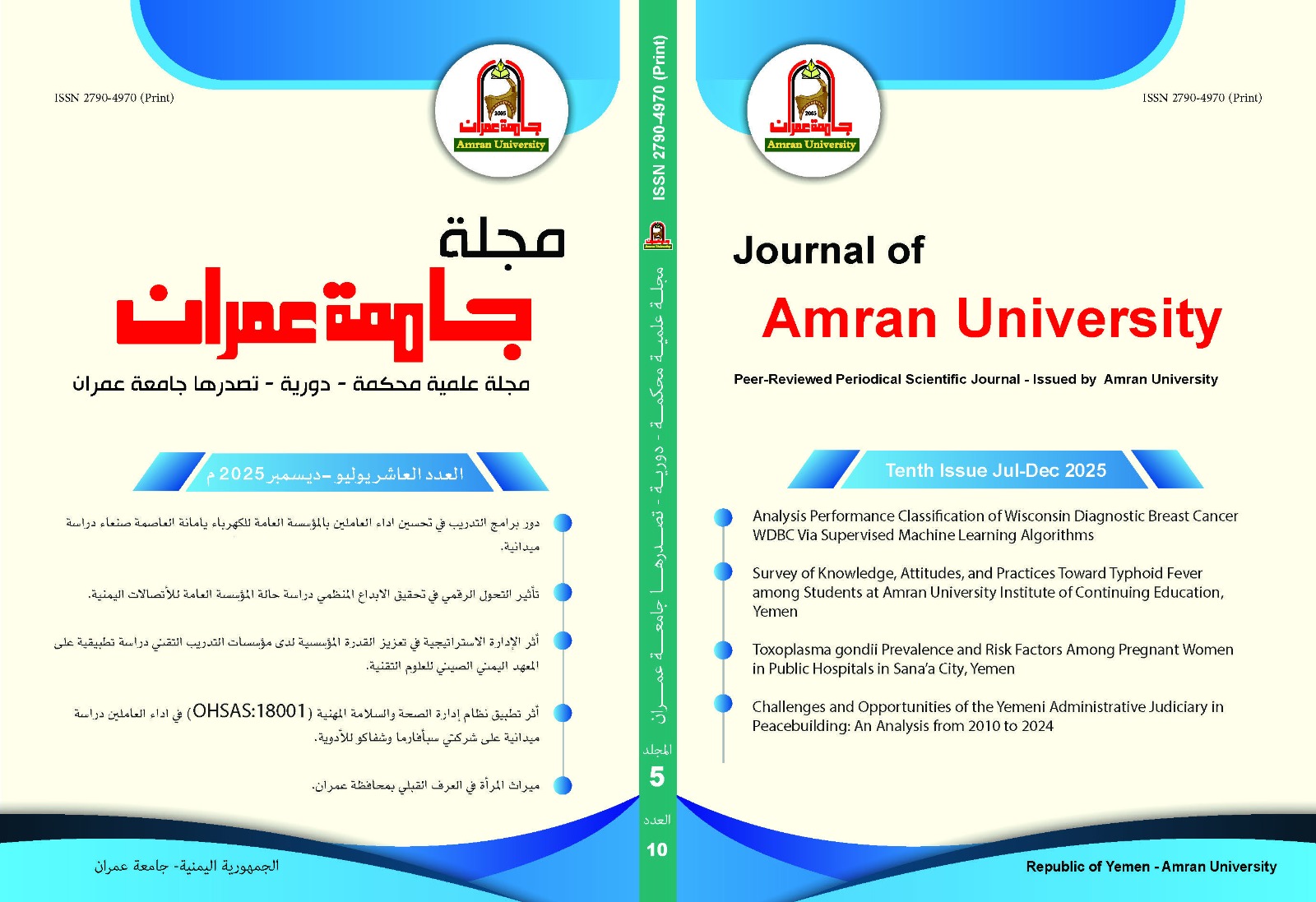
Challenges and Opportunities of the Yemeni Administrative Judiciary in Peacebuilding: An Analysis from 2010 to 2024
DOI:
https://doi.org/10.59145/jaust.v5i10.141Keywords:
Administrative judiciary, Peacebuilding, Conflict resolution, Legal reform, YemenAbstract
This study looks at the ups and downs of administrative justice in Yemen, especially during the ongoing conflict. Since 2010, as institutions have been breaking down and the war worsened from 2015 to 2024, the situation has become even more complicated. It highlights how the judiciary has crumbled and how the authority in Yemen has fallen apart, especially between Sana'a and Aden. This situation undermines people's trust in the system and results in judicial appointments that get caught up in politics, especially when it comes to how the judiciary is led. Plus, the rules governing administrative laws are unclear, and there's a real lack of clear laws on administrative procedures and how to handle legal cases, which only makes things more confusing. This makes it really tough for judges to do their jobs properly when it comes to overseeing cases. Even though there are some model administrative courts set up in Sana'a and Aden by the Supreme Judicial Council, there are no specialized administrative courts in the other governorates. That lack just makes the whole situation more complicated and harder to manage across Yemen's legal system. One big concern with splitting up the leadership of the judiciary is that it could weaken the independence of the courts. There's also a risk that political interests might influence how judges are appointed, which can undermine fairness. Plus, the judiciary might not get the resources it needs to do its job properly. The study highlights how administrative courts can really help with peacebuilding and rebuilding public trust. When they deliver justice, hold authorities accountable, and make fair decisions, people feel more confident in the system. There are opportunities for reform, like creating a clear Code of Administrative Procedure, setting up first-instance administrative courts, and establishing levels of appeal. Improving the training for judges and judicial officers is also crucial. The study emphasizes that these reforms are urgent if the administrative courts are to effectively support the rule of law and help build lasting peace in Yemen after the conflict.
Published
How to Cite
Issue
Section
License

This work is licensed under a Creative Commons Attribution-NonCommercial-NoDerivatives 4.0 International License.